Hand Woven vs Machine-Made Pendant Lights: What’s the Difference?
Pendant lighting has become one of the most important elements in contemporary interior design. Whether used in dining rooms, kitchens, living spaces, hotels, cafes, or commercial projects, pendant lights provide both illumination and decorative impact. As consumers become increasingly interested in craftsmanship, sustainability, and authenticity, a common question arises: what is the difference between hand woven and machine-made pendant lights? Understanding the distinctions can help homeowners, designers, and buyers make informed decisions that align with their style preferences and long-term expectations.
Hand woven pendant lights are created by skilled artisans who carefully shape and weave natural materials into unique lighting fixtures. Machine-made pendant lights are manufactured through automated processes designed to maximize efficiency and consistency. While both options can be attractive, they differ significantly in craftsmanship, material selection, durability, environmental impact, and visual appeal.
Understanding Hand Woven Pendant Lights
Hand woven pendant lights are crafted using traditional techniques that often require years of experience to master. Artisans work with materials such as rattan, bamboo, seagrass, wicker, cotton rope, and other natural fibers. Each piece is individually woven, giving it a unique appearance that cannot be perfectly replicated.
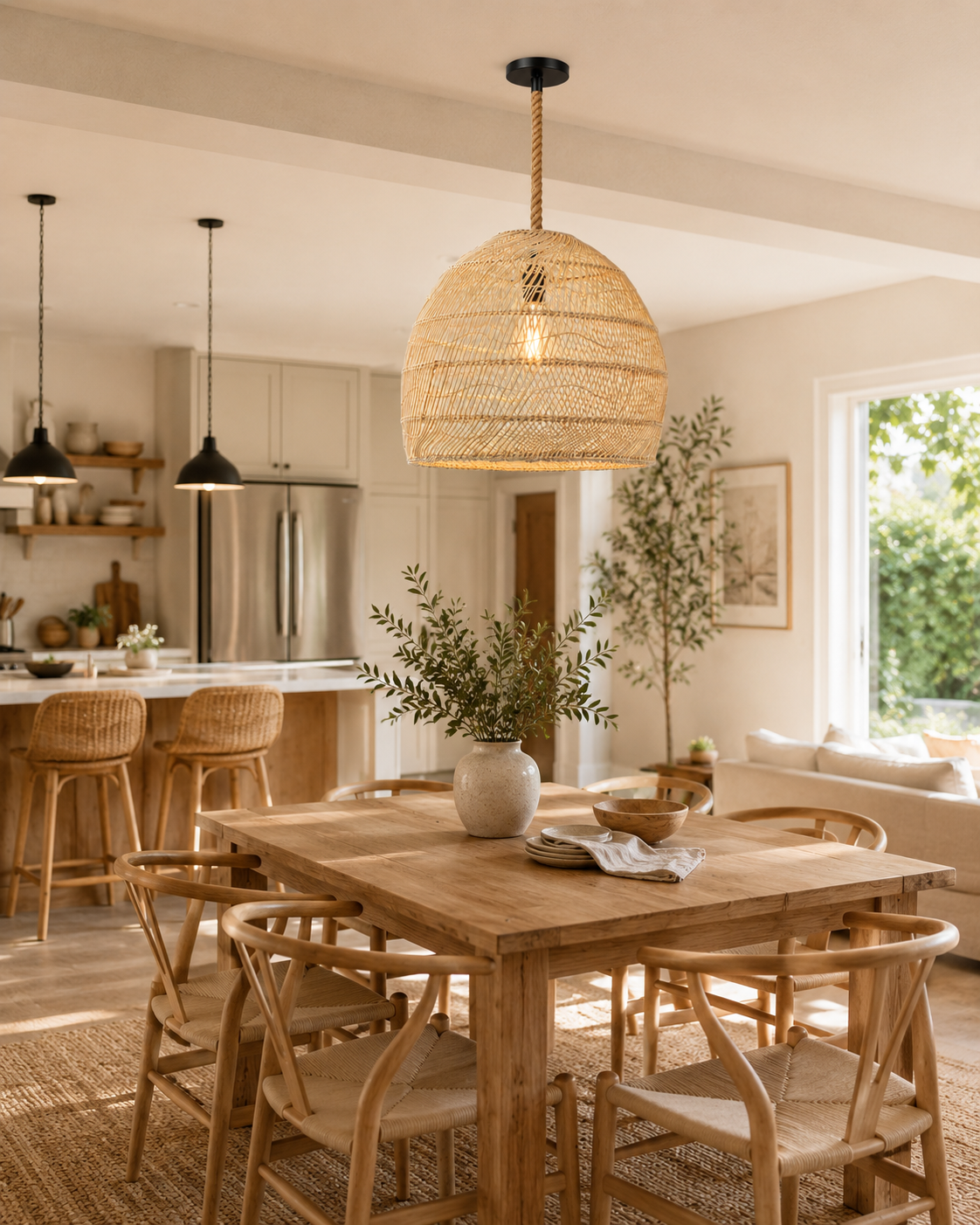
A braided wabi-sabi modern hand Woven natural rattan pendant light represents the essence of handcrafted design. Small variations in weaving patterns, texture, and shape are considered desirable because they reflect genuine craftsmanship. These subtle imperfections contribute character and authenticity that many homeowners find appealing.
Handmade lighting is often associated with artisan workshops, sustainable production methods, and slower manufacturing processes. The result is a product that tells a story and reflects human creativity.
Understanding Machine-Made Pendant Lights
Machine-made pendant lights are produced using automated equipment and standardized manufacturing procedures. Factories can generate large quantities of identical products quickly and efficiently. This consistency is often beneficial for large commercial projects that require uniformity across multiple fixtures.
Machine production reduces labor costs and typically allows manufacturers to offer lower prices. However, mass production can also lead to products that lack individuality. While modern machinery can create visually appealing designs, many consumers feel that machine-made products do not offer the same emotional connection as handmade alternatives.
Craftsmanship and Artistic Value
The most significant difference between the two categories is craftsmanship. Every hand woven fixture reflects the skills of the artisan who created it. Each curve, knot, and weave pattern demonstrates careful attention to detail.
By contrast, machine-made fixtures prioritize precision and consistency. Although they may appear flawless, they often lack the artistic nuances found in handmade products. Many interior designers value handcrafted lighting because it introduces personality and uniqueness into a room.
A braided wabi-sabi modern hand Woven natural rattan pendant light often becomes a focal point because of its artisanal quality and organic appearance.
Material Quality and Selection
Handmade manufacturers frequently emphasize natural materials and responsible sourcing. A premium rattan pendant light may be crafted from carefully selected rattan fibers chosen for strength, flexibility, and visual consistency. Artisans can adjust weaving techniques according to the natural characteristics of each material.
Machine-made products may also use natural materials, but they often rely on standardized inputs optimized for production efficiency. In some cases, synthetic materials are substituted to reduce costs.
Consumers seeking environmentally conscious choices often prefer handcrafted lighting because natural materials align with sustainable design principles.
Durability and Longevity
Durability depends on design quality, material selection, and manufacturing standards. Well-made handcrafted fixtures can last for many years when properly maintained. Artisans frequently reinforce critical structural areas to improve strength and stability.
Machine-made fixtures vary considerably in quality. Some premium manufacturers produce durable products, while lower-cost alternatives may prioritize affordability over longevity.
A high-quality woven pendant lamp constructed by experienced craftspeople often demonstrates excellent durability because every detail receives individual attention during production.
Visual Character and Uniqueness
One reason consumers choose handcrafted lighting is uniqueness. No two handmade fixtures are exactly alike. Natural variations create subtle distinctions that enhance visual interest.
Machine-made fixtures deliver consistency. Every product typically looks identical to the next. While this uniformity is useful in some environments, it may not appeal to buyers who value individuality.
For homeowners seeking distinctive interiors, a woven pendant lamp can provide texture, warmth, and character that machine-made alternatives may struggle to replicate.
Sustainability Considerations
Sustainability has become an increasingly important factor in purchasing decisions. Handcrafted lighting often supports local communities, preserves traditional skills, and utilizes renewable materials.
Many artisan workshops produce smaller quantities and generate less industrial waste than large-scale manufacturing facilities. Products such as a braided wabi-sabi modern hand Woven natural rattan pendant light often align with eco-conscious lifestyles because they celebrate natural materials and responsible craftsmanship.
Machine-made production can achieve efficiency advantages, but large-scale manufacturing may consume more resources depending on production methods and supply chains.
Design Flexibility
Artisans can often customize dimensions, patterns, and finishes according to client requirements. This flexibility makes handmade lighting attractive for bespoke residential and hospitality projects.
Machine-made fixtures generally offer fewer customization options because production lines are designed for standardized output. Although some manufacturers provide multiple finishes or sizes, customization remains limited compared to handcrafted alternatives.
Interior Design Applications
Handmade fixtures complement numerous design styles including Wabi-Sabi, Japandi, Scandinavian, coastal, rustic, tropical, and organic modern interiors. A rattan pendant light can introduce warmth and texture into minimalist spaces while maintaining visual simplicity.
Likewise, a natural rattan chandelier serves as an elegant centerpiece in dining rooms, hotel lobbies, and open-concept living areas. The organic structure creates visual depth while softening contemporary environments.
Machine-made fixtures are commonly used in modern commercial projects where consistency and scalability are priorities.
Connection to Wabi-Sabi Design
The growing popularity of Wabi-Sabi interiors has increased demand for handcrafted lighting. Wabi-Sabi values imperfection, authenticity, and natural beauty. Handmade products naturally align with these principles.
A braided wabi-sabi modern hand Woven natural rattan pendant light embodies these ideals through organic textures and subtle irregularities. Rather than hiding imperfections, Wabi-Sabi celebrates them as evidence of authenticity.
Bohemian and Natural Aesthetics
Handcrafted lighting is also closely connected with boho lighting trends. Natural fibers, layered textures, and artisan techniques define many bohemian interiors. Designers frequently combine boho lighting elements with Wabi-Sabi influences to create relaxed and inviting environments.
A woven pendant lamp or natural rattan chandelier can enhance both styles while contributing visual warmth and craftsmanship.
Cost Comparison
Machine-made products are generally less expensive because automated manufacturing reduces labor requirements. Handcrafted fixtures often command higher prices due to the time, skill, and attention required for production.
However, many buyers view handmade lighting as a long-term investment rather than a simple purchase. The uniqueness, quality, and artistic value can justify the higher initial cost.
A carefully crafted natural rattan chandelier may provide lasting aesthetic value that extends far beyond its functional purpose.
Which Option Is Right for You?
The best choice depends on your priorities. If affordability, consistency, and rapid availability are most important, machine-made lighting may be appropriate. If you value craftsmanship, sustainability, uniqueness, and authentic design, handcrafted fixtures offer compelling advantages.
Homeowners seeking statement pieces often choose a rattan pendant light because it combines functionality with artistic expression. Designers working on luxury residential or boutique hospitality projects frequently prefer artisan-made products because they create memorable visual experiences.
Conclusion
Both hand woven and machine-made pendant lights have advantages, but they serve different needs. Handmade fixtures emphasize craftsmanship, individuality, and natural beauty, while machine-made alternatives focus on consistency and efficiency. Whether selecting a braided wabi-sabi modern hand Woven natural rattan pendant light, a decorative rattan pendant light, a textured woven pendant lamp, stylish boho lighting, or a dramatic natural rattan chandelier, understanding these differences helps buyers make informed decisions. As consumers increasingly appreciate authenticity, sustainability, and artisan craftsmanship, handcrafted lighting continues to stand out as a meaningful and timeless choice.
SEO Tags: braided wabi-sabi modern hand Woven natural rattan pendant light, braided wabi-sabi modern hand Woven natural rattan pendant light, braided wabi-sabi modern hand Woven natural rattan pendant light, rattan pendant light, rattan pendant light, rattan pendant light, woven pendant lamp, woven pendant lamp, woven pendant lamp, boho lighting, boho lighting, boho lighting, natural rattan chandelier, natural rattan chandelier, natural rattan chandelier, natural rattan chandelier.
READ MORE
How to Decorate a Japandi Living Room with Woven Pendant Lighting
Why Natural Rattan Pendant Lights Make Homes Feel Warmer
How to Style a Modern Dining Room with Rattan Pendant Lights
What Is Wabi-Sabi Lighting and Why Is It So Popular?