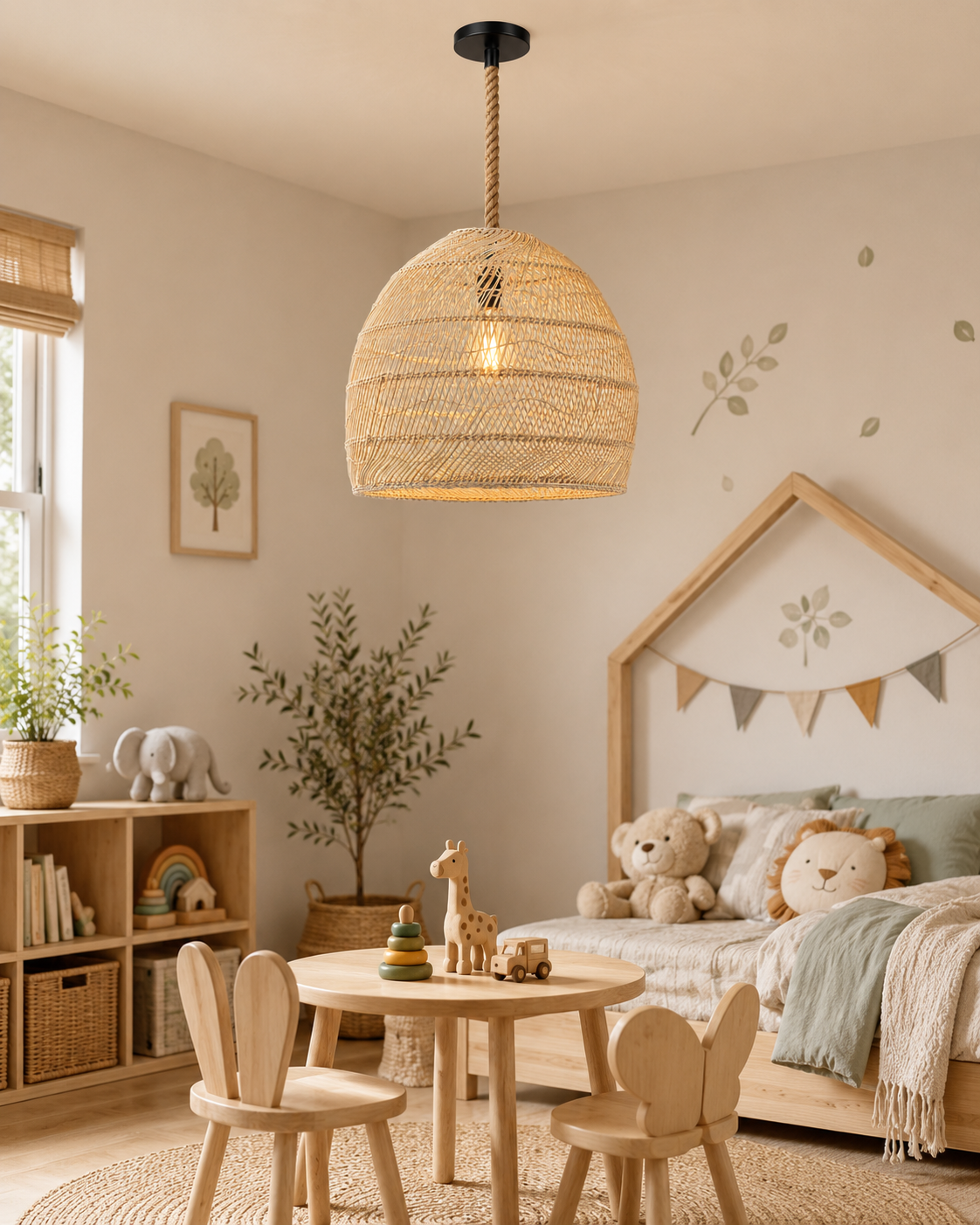
What Is Wabi-Sabi Lighting and Why Is It So Popular?
Wabi-Sabi lighting has become one of the most influential trends in contemporary interior design. Rooted in traditional Japanese philosophy, Wabi-Sabi celebrates imperfection, authenticity, simplicity, and the natural aging process of materials. Instead of pursuing flawless finishes and mass-produced perfection, this design approach embraces organic textures, handcrafted details, and understated elegance. Lighting plays a central role in expressing these principles because it shapes atmosphere, highlights textures, and creates emotional connections within a space.
Today, homeowners, architects, interior designers, boutique hotels, restaurants, and commercial property developers are increasingly turning toward Wabi-Sabi-inspired lighting solutions. Products such as braided wabi-sabi modern hand Woven natural rattan pendant light fixtures, artisan-crafted lamps, woven shades, and naturally textured ceiling lights are becoming highly desirable because they offer a sense of warmth and authenticity that many modern interiors lack.
The Philosophy Behind Wabi-Sabi
The concept of Wabi-Sabi originates from centuries-old Japanese aesthetics. At its core, it encourages people to appreciate beauty in things that are imperfect, incomplete, and transient. Unlike modern consumer culture, which often focuses on constant replacement and flawless appearances, Wabi-Sabi invites us to value natural materials, craftsmanship, and the passage of time.
When applied to lighting, this philosophy encourages the use of handcrafted products made from natural materials such as rattan, bamboo, wood, cotton rope, linen, and clay. The subtle irregularities found in these materials create character and uniqueness. No two pieces are exactly alike, making every fixture feel special and personal.
Why Wabi-Sabi Lighting Is Becoming So Popular
One major reason for its popularity is the growing desire for calm and comforting interiors. Modern life is often fast-paced and digitally overwhelming. Many people want their homes to become places of relaxation and mindfulness. Wabi-Sabi lighting helps create that atmosphere through soft illumination, organic forms, and natural textures.
Another reason is sustainability. Consumers are increasingly concerned about environmental impact. Handcrafted products made from renewable materials often align with eco-conscious values. A braided wabi-sabi modern hand Woven natural rattan pendant light can provide both aesthetic appeal and environmental responsibility, making it attractive to modern buyers.
Social media platforms and interior design publications have also contributed to the trend. Images featuring earthy palettes, textured materials, and artisan-made fixtures frequently attract attention because they feel timeless and authentic rather than temporary or trendy.
The Importance of Natural Materials
Natural materials define the essence of Wabi-Sabi lighting. Rattan is one of the most popular choices because it combines flexibility, durability, and visual warmth. A carefully crafted rattan pendant light introduces texture and softness while maintaining an elegant appearance. Designers often select rattan because it diffuses light beautifully and complements a wide variety of interior styles.
Similarly, a woven pendant lamp creates depth and visual interest through intricate patterns and handcrafted weaving techniques. These fixtures cast subtle shadows across walls and ceilings, producing a layered lighting effect that enhances ambiance.
Wood, bamboo, linen, and natural fibers also play important roles. Their organic imperfections contribute to the authentic appearance that defines the Wabi-Sabi aesthetic.
How Wabi-Sabi Lighting Creates Atmosphere
Lighting is more than illumination. It influences emotions, mood, productivity, and comfort. Wabi-Sabi lighting prioritizes gentle, warm illumination instead of harsh brightness. The goal is to create inviting environments that encourage relaxation and connection.
Many designers use layered lighting strategies that combine pendant lights, table lamps, floor lamps, and accent lighting. The result is a balanced environment with varying levels of brightness and visual depth. Natural textures become more noticeable under soft light, further reinforcing the philosophy of appreciating material authenticity.
Connection to Japandi Design
The popularity of Wabi-Sabi lighting is closely connected to the rise of Japandi interiors. Japandi combines Japanese minimalism with Scandinavian functionality. Both design philosophies value simplicity, natural materials, craftsmanship, and purposeful living.
A rattan pendant light frequently appears in Japandi spaces because it bridges both traditions. Its natural appearance adds warmth to minimalist environments while maintaining clean visual lines. The combination creates interiors that feel sophisticated yet welcoming.
Why Handmade Products Matter
Mass production often prioritizes efficiency over individuality. Wabi-Sabi lighting takes a different approach by emphasizing craftsmanship. Handcrafted fixtures reflect the skill, experience, and creativity of artisans. Small variations in weaving patterns, textures, and finishes become part of the product’s charm.
Consumers increasingly value these qualities because they create emotional connections. Owning a handmade lighting fixture feels different from owning a mass-produced object. The product tells a story about materials, techniques, and human creativity.
This appreciation for craftsmanship helps explain the growing demand for braided wabi-sabi modern hand Woven natural rattan pendant light collections among homeowners and designers worldwide.
Wabi-Sabi Lighting in Different Rooms
Living rooms benefit from statement fixtures that establish focal points while maintaining a relaxed atmosphere. Dining areas often feature oversized woven pendant lamp designs positioned above tables to create intimacy and warmth.
Bedrooms benefit from soft ambient lighting that supports rest and relaxation. Natural materials contribute to a peaceful environment that aligns with wellness-focused lifestyles.
Kitchens increasingly incorporate artisan lighting as a way to soften contemporary cabinetry and hard surfaces. Even bathrooms can benefit from carefully selected fixtures that introduce texture and warmth.
The Role of Bohemian Influences
Many consumers associate Wabi-Sabi lighting with boho lighting because both styles emphasize natural materials and handcrafted elements. However, there are important differences. Bohemian interiors often feature vibrant colors, eclectic collections, and layered decorative details.
Wabi-Sabi interiors tend to be more restrained, focusing on simplicity and intentional design choices. Despite these differences, boho lighting products frequently complement Wabi-Sabi spaces because they share an appreciation for craftsmanship and natural textures.
As a result, many designers successfully combine Wabi-Sabi principles with selected boho lighting elements to create unique and inviting interiors.
Why Rattan Continues to Dominate
Rattan remains one of the most sought-after materials in contemporary lighting design. A natural rattan chandelier can serve as a striking centerpiece while maintaining the understated elegance associated with Wabi-Sabi interiors. Unlike metal or plastic fixtures, rattan introduces softness and visual warmth.
The lightweight nature of rattan also makes it practical for large-scale designs. This flexibility allows artisans to experiment with shapes, patterns, and proportions while preserving structural integrity.
A natural rattan chandelier can work equally well in coastal homes, modern apartments, boutique hotels, and rustic retreats. Its versatility contributes significantly to its ongoing popularity.
Sustainability and Conscious Consumption
Environmental awareness continues to influence purchasing decisions across the home decor industry. Consumers increasingly prefer products that support sustainability and responsible sourcing. Natural fibers, renewable materials, and artisan production methods align with these values.
Choosing a braided wabi-sabi modern hand Woven natural rattan pendant light or a natural rattan chandelier often reflects a broader commitment to conscious consumption. Buyers appreciate products designed to last rather than items intended for short-term use.
This shift toward quality, longevity, and environmental responsibility strongly supports the growth of Wabi-Sabi lighting.
Future Trends
The future of Wabi-Sabi lighting appears extremely promising. As sustainability, wellness, and authenticity continue to influence design preferences, demand for handcrafted lighting is expected to increase. Designers are exploring innovative ways to combine traditional craftsmanship with modern technology while preserving the philosophy’s core values.
Natural materials, artisan techniques, and timeless aesthetics are unlikely to lose relevance. Instead, they may become even more important as consumers seek alternatives to disposable products and rapidly changing trends.
Conclusion
Wabi-Sabi lighting is popular because it offers something increasingly rare in modern life: authenticity. Through handcrafted design, natural materials, organic textures, and mindful simplicity, it creates spaces that feel warm, welcoming, and meaningful. Whether through a braided wabi-sabi modern hand Woven natural rattan pendant light, a carefully designed rattan pendant light, a decorative woven pendant lamp, selected boho lighting accents, or a statement natural rattan chandelier, these fixtures transform interiors into environments that celebrate beauty in its most natural form. As sustainability, craftsmanship, and emotional well-being continue to shape consumer preferences, Wabi-Sabi lighting will remain a defining influence in interior design for years to come.
SEO Tags: braided wabi-sabi modern hand Woven natural rattan pendant light, braided wabi-sabi modern hand Woven natural rattan pendant light, braided wabi-sabi modern hand Woven natural rattan pendant light, rattan pendant light, rattan pendant light, rattan pendant light, woven pendant lamp, woven pendant lamp, woven pendant lamp, boho lighting, boho lighting, boho lighting, natural rattan chandelier, natural rattan chandelier, natural rattan chandelier, natural rattan chandelier.
READ MORE
How to Decorate a Japandi Living Room with Woven Pendant Lighting
Why Natural Rattan Pendant Lights Make Homes Feel Warmer
How to Style a Modern Dining Room with Rattan Pendant Lights
Hand Woven vs Machine-Made Pendant Lights: What’s the Difference?